
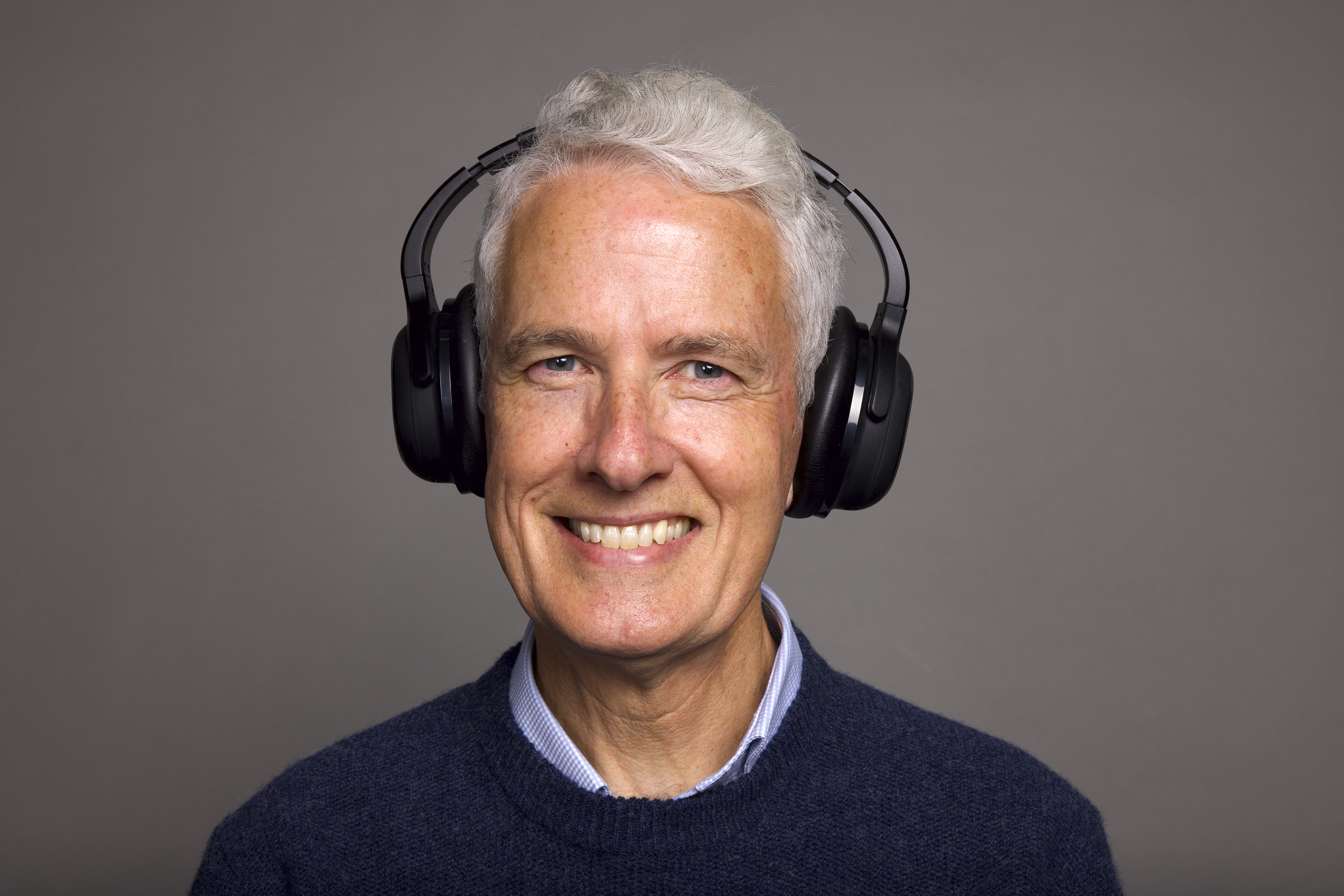
Whether it’s music, podcasts, phone calls or streaming your favourite shows, headphones and earbuds have become part of everyday life for both adults and children. While listening technology offers convenience, entertainment and connection, it’s important to use it in ways that support long-term hearing health.
One of the most common risks to hearing is listening at high volumes for extended periods. In noisy environments such as public transport, gyms, some workplaces or busy households, many people instinctively increase the volume to compete with background noise. Repeated exposure to loud sound over time can contribute to noise-induced hearing loss.1
Safe listening is not only about lowering the volume — it’s also about reducing listening strain.2 Choosing headphones or earbuds that fit well and help minimise surrounding noise can make it easier to hear clearly without turning the sound up too high. Some listening devices may also include features such as noise reduction, volume limiting or sound adjustment settings that support more comfortable listening at lower levels.
A useful guide for everyday listening is the “80/90 rule”2— listening at no more than 80% volume for no longer than 90 minutes at a time. Taking regular listening breaks also gives your ears an opportunity to rest and recover.
Healthy listening habits are especially important for children and teenagers, who are often regular users of personal listening devices. Parents and caregivers can support hearing health by monitoring listening time, encouraging regular breaks and making use of device volume limit settings where available.
Simple tips for safer listening
- Here are some practical ways to help protect your hearing every day:
- Keep the volume at a comfortable level and avoid increasing it to block background noise
- Follow the “80/90 rule” as a guide for volume and listening time
- Take regular breaks from headphones and earbuds
- Use well-fitting or noise-reducing listening devices in noisy environments
- Enable volume limit settings on phones and personal devices where available
- Watch for warning signs such as ringing ears, listening fatigue or muffled hearing after use
Healthy hearing habits today can help protect your hearing well into the future. If you have questions about hearing health, our team is always here to help.
1 Dillard LK, Arunda MO, Lopez-Perez L, Martinez RX, Jiménez L, Chadha S. Prevalence and global estimates of unsafe listening practices in adolescents and young adults: a systematic review and meta-analysis. BMJ Glob Health. 2022 Nov;7(11):e010501. doi: 10.1136/bmjgh-2022-010501. PMID: 36379592; PMCID: PMC9723884.
2 Portnuff, Cory D. F.. “Reducing the risk of music-induced hearing loss from overuse of portable listening devices: understanding the problems and establishing strategies for improving awareness in adolescents.” Adolescent Health, Medicine and Therapeutics 7 (2016): 27 - 35.
Home
- About Hearing Australia
- Adult Hearing Services
- Hearing Products
- Health Professionals
- Children Young Adult Services
- First Nations Services
-
News and Articles
- Preventable ear disease twice as common among remote First Nations children
- Hearing Australia research reveals hearing health gap for women ahead of Mother’s Day
- Sweet sounds of retirement: Sally’s story
- Why not acting on hearing loss can put your wellbeing at risk
- Hearing Australia first in the world to provide innovative Australian-developed hearing aid technology to help people hear better
- As one in five First Nations children face undiagnosed hearing loss in the years before starting school, Hearing Australia urges early hearing checks
- From client to clinician: Jorja’s journey comes full circle
- Margie’s Story: Breaking Barriers with Hearing Support
- Hearing hope for baby Ezlin
- Hearing Australia seeks new Board Director to help shape the future of hearing health
- Your questions answered about the new XG and XH hearing aid range
- Rediscovering connection – How Chris’s turning point led him to take action
- The hidden harm of fluctuating ear disease in First Nations children
- Voted Reader's Digest #1 Trusted Brand 5 Years Running!
- Understanding funding options
- NAL unveils breakthrough solution for people with minimal or no measurable hearing loss
- Healthy hearing, healthy relationships
- 5 practical ways to care for your hearing
- Self-inflicted ageism the biggest barrier to getting help against hearing loss
- Healthy hearing vital for healthy relationships
- New Board appointment and new program for vulnerable Australians
- The role of good hearing in staying connected and combating loneliness
- Spotting hearing loss in busy places: Rob’s journey to better hearing
- Breaking the (sound) barriers: Why it’s time to take action on hearing loss
- Improving access to hearing care for vulnerable Australians
- Reflecting on a year of impact and commitment to hearing health
- Time to make a noise about workplace hearing damage as 11 per cent of Australians experience it, new Hearing Australia research reveals
- 2024 Hearing Australia Lifetime Achievement Award
- Good hearing health helps to overcome loneliness
- Improving Hearing Health Outcomes for Young First Nations Children
- Hearing Australia calls on veterans to ‘take aim’ at hearing loss to improve wellbeing
- How to manage hearing loss when you live alone
- Hearing Australia urges greater action on occupational noise-induced hearing loss
- Tinnitus in children
- Hearing Australia announces game-changing new partnerships designed to help close First Nations hearing gap
- Working together through the pandemic to change the lives of children with hearing loss
- Hearing Australia Marrickville centre officially opened
- How to sleep easier with tinnitus
- Top apps for people with hearing loss
- Hearing apps and other resources
- Why hearing aids don’t mean the end of your smartphone addiction
- Why you keep hearing the same tune in your head
- 5 ways hearing aids may help you feel younger
- The link between hearing loss and depression
- What you need to know about hearing loss and diabetes
- Becoming part of the Deaf Community
- Staying safe with hearing loss
- Managing hearing loss in the workplace
- How to convince older relatives they should check hearing
- 6 ways to help your partner manage their hearing loss
- Hearing loss and anxiety
- The restaurants your friend with hearing loss will love
- Staying Social with a Hearing Aid
- 5 life-changing reasons to stop hiding your hearing loss
- Communicating with someone who has a hearing loss
- Great tips to make communicating with a hearing loss easier
- Hearing Australia partners with community spokespeople to ensure First Nations kids are school ready
- Hearing Australia launches ‘Spirit of Sound’ to support First Nations children’s hearing health
- Emma Donovan and Luke Carroll team up with Hearing Australia to prevent avoidable hearing loss in kids
- Twelve days of happy hearing this festive season
- NAL research is CUHL for kids with hearing loss
- NAL proves early hearing help gives children better outcomes
- Hearing Australia urges action on occupational noise-induced hearing loss as National Safe Work month begins
- Hearing Australia helps families make the best choices for their child’s hearing health
- Hearing Australia comes out tops in the 2021 Reader’s Digest Service Awards
- Hearing Australia and Macquarie University collaborate to transform hearing health
- World leading research by NAL proves early hearing help gives children a sound start to school
- TeleOutreach improving hearing outcomes for children in remote communities
- New screening tools help improve the hearing health of Aborignal and Torres Strait Islander children earlier
- Kim Terrell announced as new Managing Director of Hearing Australia
- A Celebration of Sound
- Ida Institute partners with National Acoustic Laboratories to strengthen evidence-base for person-centered care
- Hearing Australia client Trent Forbes competes in Invictus Games
- Hearing the future conference and gala dinner
- New NAL study a PROMO for helping children with hearing loss
- Remote vs in-person hearing services: National Acoustic Laboratories research shows clinical outcomes remain the same
- Hearing Australia urges veterans to take action on their hearing health
- Hearing Australia’s First Nations Services Unit is working to improve the hearing health of Aboriginal and Torres Strait Islander children
- New app from National Acoustic Laboratories improves communication at hearing health clinics
- National Acoustics Laboratories releases hearing aid solution that overcomes effects of face masks on speech
- How to Tell If You Have A Hearing Loss
- What hearing support is available for my child in high school?
- Tinnitus- What Is It and How To Treat It
- The PLUM and HATS checklists
- How to manage job-seeking with hearing loss
- Signs my baby has hearing loss
- Has my child’s hearing loss become worse?
- Nine tips to help relieve your child’s tinnitus
- What to do when you find out your child has a hearing loss
- What to do if your child suddenly develops hearing loss
- My child needs a cochlear implant. Now what?
- Helping your child manage hearing loss in a noisy world
- Get organised: useful tips for parents of children with hearing loss
- What Hearing Support Is Available for My Child In Primary School?
- Seven Tips to Help You Manage Hearing Loss at Uni
- Resources for Teens With Hearing Loss
- One of my students has a hearing aid: what do I need to know?
- How to manage glue ear in children
- How can technology help my child manage hearing loss at primary school?
- Hands up! Managing hearing loss in the classroom
- What to consider when choosing a hearing aid for your child
- Safety tips for children's hearing aids
- Signs of hearing issues in Aboriginal and Torres Strait Islander children
- Helping your child get used to their hearing aids
- Top 3 Hearing Aid Myths Busted
- What does hearing loss sound like?
- What can I do to protect my child's hearing?
- Tips for safe listening using headphones and earbuds
- Is my hearing at risk?
- How can I tell when it's too loud?
- How can I stop noise from damaging my hearing?
- Hearing Australia Action Plan for Improving Ear Health and Hearing Outcomes for Aboriginal and Torres Strait Islander Children
- Halving the rate of hearing loss in First Nations children by 2029
- How to do a daily check of your child's hearing aid
- Babies and hearing aids: what you need to know
- Help children to love their hearing aids
- Hear for School: A development program for teachers
- Blow Breathe Cough