
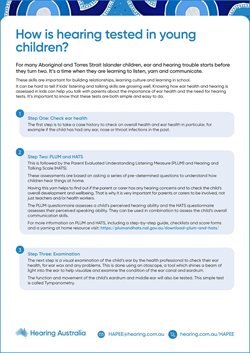
For many Aboriginal and Torres Strait Islander children, ear and hearing trouble starts before they turn two. It’s a time when they are learning to listen, yarn and communicate. These skills are important for building relationships, learning culture and learning in school.
Resources for Health Professionals
Tympanometry
Tympanometry is a simple and easy test to help diagnose ear troubles. It tests how well your middle ear is working by measuring how your ear drum moves. It uses an instrument called a tympanometer for the test. The tympanometer plays a sound and changes the pressure in the ear canal. It records how the ear drum moves responds to the change in pressure.
Have you trained in tympanometry in the past, but haven’t used it in a while?
Do you want to learn about tympanometry?
If yes, this recommended 20-minute refresher video on tympanometry is for you. Watch and listen as one of our audiologists talks about:
- why, when, and how to use this very useful tool,
- how the results link to what is happening in the ear,
- how to interpret the results.
There are self-test questions along the way, for you to check your understanding.
Click below to watch the video. When you’ve finished, leave your review at this link here.
Watch this video to learn or refresh your learning about tympanometry
It includes:
- What a tympanometer does
- Why we use tympanometry
- How we use tympanometry
- What the results mean
PLUM and HATS
Many Aboriginal and Torres Strait Islander bubs have ear and hearing trouble. This happens often when they are very young. If bubs can’t hear well, they can’t learn to listen or yarn. This can affect their future education, work, and social life.
But if some hearing problems are found early, they can be fixed. Hearing Australia and the National Acoustic Laboratories (NAL) worked with health and early childcare services to create two new tools, PLUM and HATS. They can help with this.
WHAT are the PLUM and HATS?
The Parent-Evaluated Listening and Understanding Measure or the PLUM has 10 questions. It checks for possible listening troubles. The Hearing And Talking Scale or HATS has 5 questions to check for yarning and listening troubles. These tools are easy to use, even by people who are not trained to do hearing or language tests. Health workers and early educators can use them with parents to find children who may need more help.
The tools use pictures to help parents talk about their child’s listening and yarning. The tools can be used with Aboriginal and Torres Strait Islander children under 6 years from cities and remote areas. They can be used with families who speak any language. An interpreter can be used if needed.
Access the PLUM and HATS checklists
Healthcare workers and early educators can learn more about how to use the tools
Blow Breathe Cough
Hearing Australia and Menzies School of Health Research developed an animation of the Blow Breathe Cough (BBC) activity.
Oliver Abbott Animation created the video. It is available in nine languages. This includes Kimberley Kriol, Martu, Ngaanyatjara, Eastern Arrernte, Warlpiri, and English.
The animation has three activities. These activities are based on good health practices. They help to stop germs from spreading ear troubles, colds, and coughs. The video covers:
- blowing your nose until it's empty,
- washing and drying hands and faces, and
- coughing into elbows.
Teachers say it reduces runny noses, ear troubles, coughs, and colds. They also say it helps children learn to blow their noses properly and on their own.
Families, teachers, early educators, and health workers developed the animation. We hope you and your students enjoy it!
Otitis Media (OM) Guidelines
The Otitis Media (OM) Guidelines were created in 2021. The Guidelines help healthcare workers treat ear troubles in Aboriginal and Torres Strait Islander children. You can get the guidelines as a PDF or through an app. The app has four parts:
- Diagnosis and Management
- Communication Tool
- Educational Resources
- Guidelines
The “Diagnosis and Management” part helps reduce mistakes in diagnosing, managing and referring for OM.
The “Communication Tool” has audio messages in six languages about ear health and hearing. They include family messages and information of the different types of OM.
The “Educational Resources” part includes tools for health workers, families, and children:
- Pictures and videos of OM
- A quiz on ear pictures
- Video on Tympanometry
- Hearing loss simulation
- Cartoon videos about hearing loss, ear health, and how tubes are put in the ear drum
The “OM Guidelines” part explains how the guidelines were made and gives an overview of OM. It also describes how strong the evidence is behind the guidelines and gives a summary of findings. It also has the main three parts of the guidelines:
- Prevention of OM and hearing loss
- Diagnosis, prognosis, and management of OM
- Audiological assessment and management
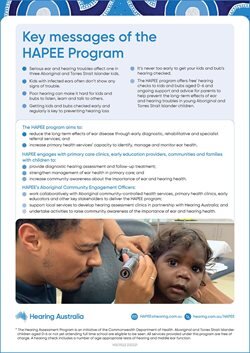
Hearing Australia has developed a range of information resources to help parents, carers, families and communities, as well as health and education professionals and workers better understand the issues around ear health and hearing in Aboriginal and Torres Strait Islander children.
These resources tell you:
- what you need to know to help prevent ear infections and hearing loss in children
- where and how to get help
- about the assessments and the treatment/management options
- how you can help raise awareness of the program in your communities and local areas to enlist more children into the program and prevent hearing loss.
The following links will take to you to each of the resources, which you can download and print as needed.
HAPEE Toolkit
Introduction to the HAPEE program and guide to building your community toolkit
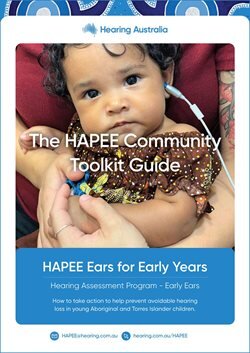
General resources about HAPEE for the community
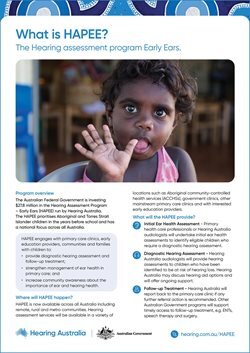
Resources/Handouts for Parents and Carers in the community
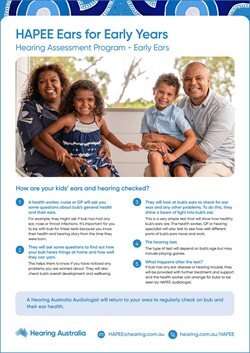
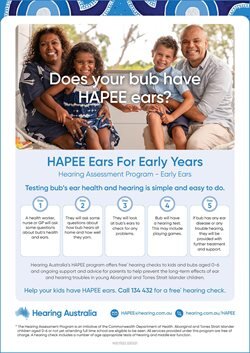
Resources/Handouts for Health and Education workers
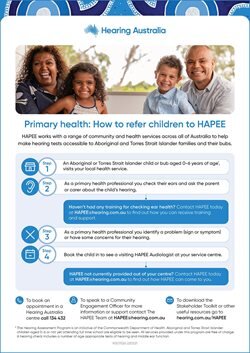
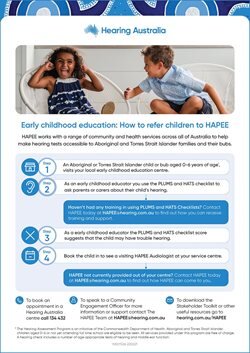
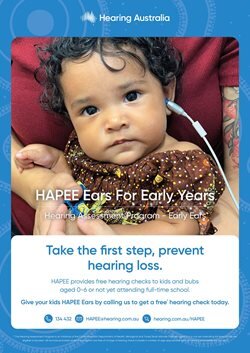
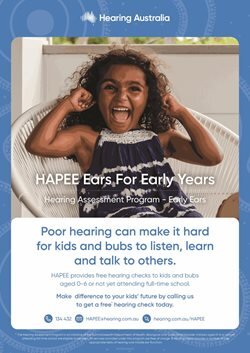
HAPEE Ears for Early Years Poster to promote the program in your centre
A3 Posters
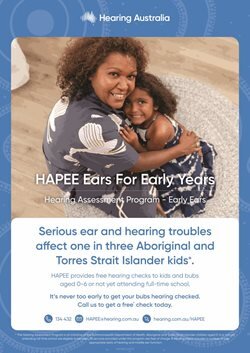


Telehealth Promotion
Telehealth A3 Posters
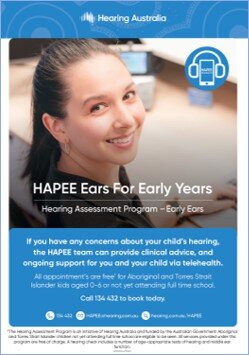
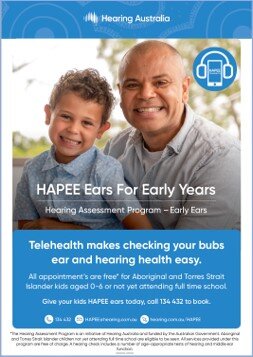
Telehealth Handout
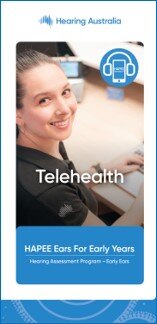
Spirit of Sound Toolkit
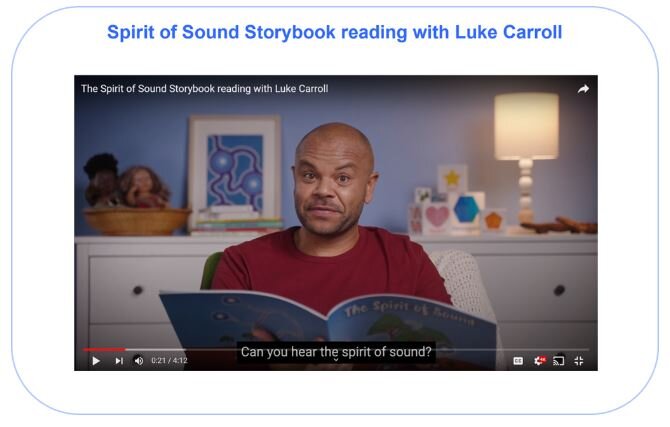
Spirit of Sound Storybook reading with Luke Carrol
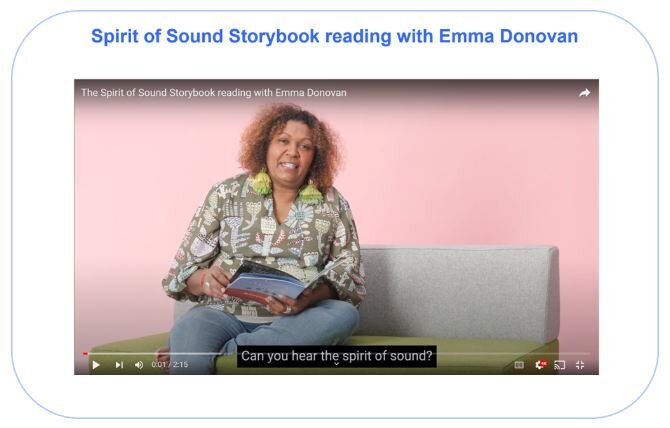
Spirit of Sound Storybook reading with Emma Donovan
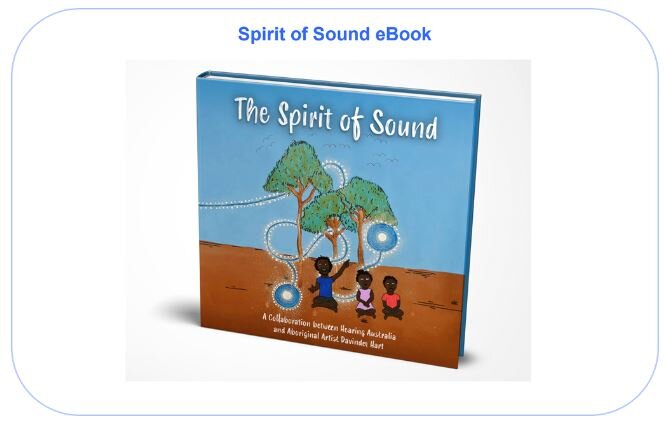
Spirit of Sound eBook
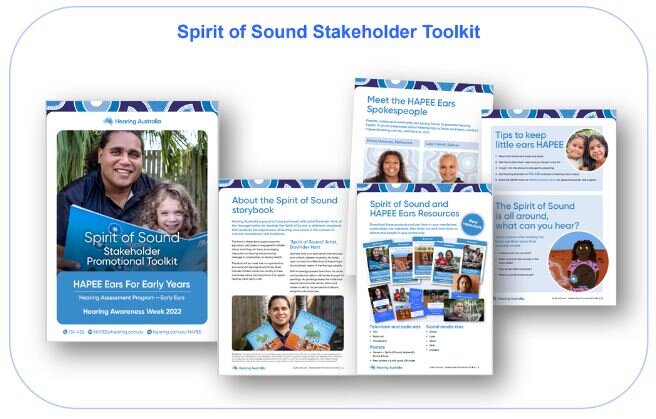
Spirit of Sound Stakeholder Toolkit
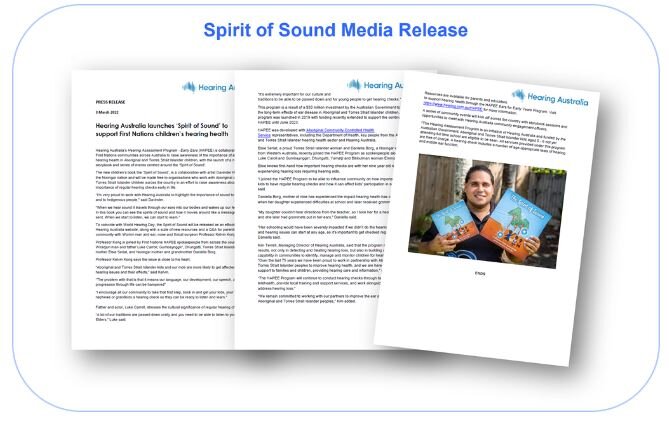
Spirit of Sound Media Release
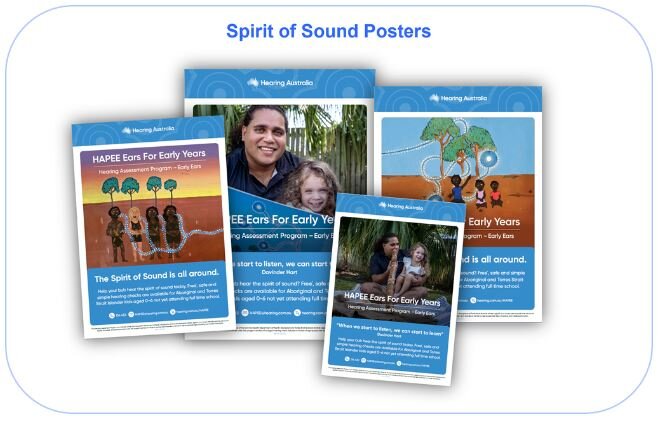
Spirit of Sound Posters
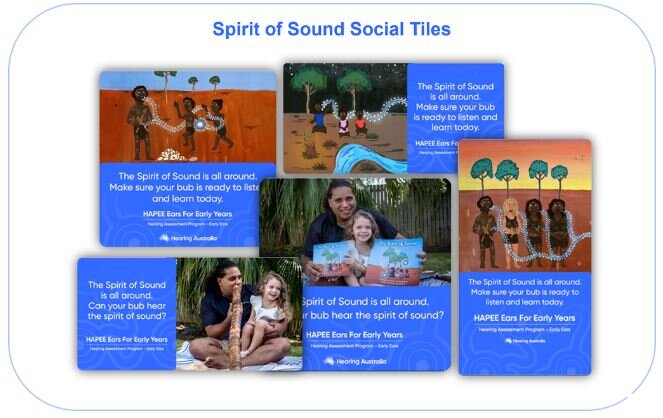
Spirit of Sound Social Tiles
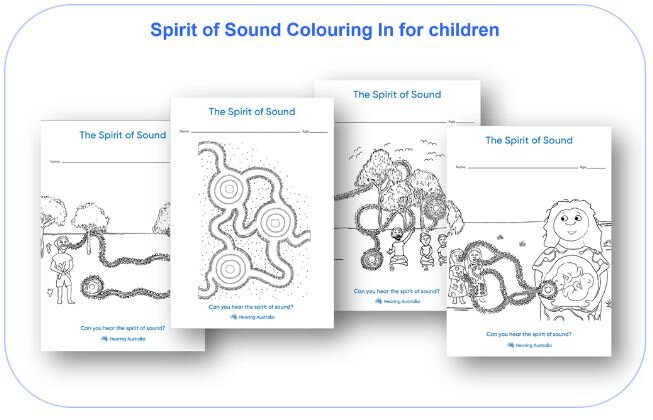
Spirit of Sound Colouring in for Children
To get your free* hearing check call us on 1300 253 655 or email firstnations@hearing.com.au
Give your kids HAPEE Ears today.
* Only 15 minute hearing checks are free. Other services may attract charges/fees or may be subsidised for those eligible under the Australian Government Hearing Services Program, to which conditions apply. A hearing check is a screening that helps identify people that may have hearing loss.